Autonomy: A Missing Ingredient in Your Startup's Marketing Strategy

Updated: Feb 9
Pressure does two things: Bursts pipes and makes diamonds! There’s a good chance that throughout the last fifteen years or so, if you were one of the hundreds of guys that I have either played basketball with or against—you’ve most certainly heard me emphatically express that phrase a time or two during a game on the basketball court.
Depending on whether you were a teammate of mine at the time—or an opponent, the motivation behind the phrase was either used to inspire you to take and make a big shot; or instill just enough timidity within you to discourage you from doing so.
From a psychological perspective, mentioning all that was at stake to an opponent during a game by implying that they were under pressure, was enough to dissuade them from making a big play. While oftentimes it had an opposite effect on my teammates.
Which brings us to the power of autonomy in your marketing strategy (I promise, this will all make sense soon).
What makes autonomy so important for your marketing strategy?
After years of studying psychology, one of the more interesting things that I discovered has been how the human mind reacts to pressure. Stress reaction, aka “the fight-or-flight” response, is how the body inherently reacts both physically and emotionally to perceived threats or demands.
Stress reaction is what leads some people to respond positively to intense demands—like hitting a game-winning buzzer beater in a basketball game under intense pressure; and how some people respond negatively in the same situation; like being too afraid to take the shot and turning the ball over.
Yes, pressure actually bursts pipes and makes diamond; both literally and figuratively.
Which is why autonomy is such an important ingredient in a successful marketing recipe for your startup.
Autonomy alleviates angst within the consumer so that they feel free enough to consider your offer with a positive mindset. As opposed to taking the flight approach if they perceive you’re applying too much pressure to get the sale.
Autonomy is key—but so is tension
To clarify, making autonomy a focal point of your marketing strategy isn’t about removing the element of tension from the consumer’s purchasing decision when considering purchasing your product. In fact, autonomy actually creates more tension within the consumer—just in a good way.
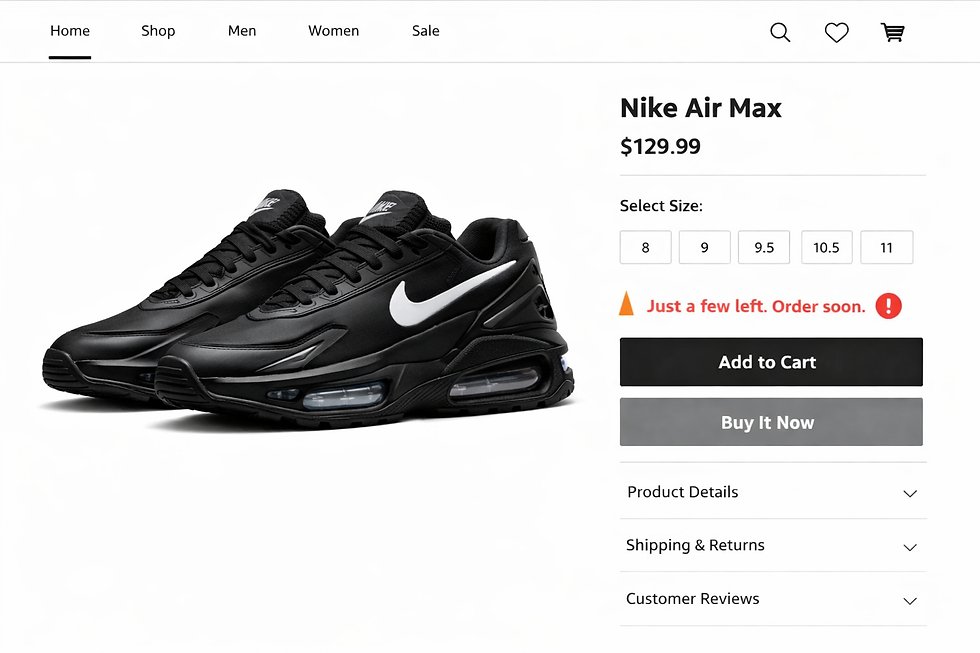
For example, while casually scrolling on his favorite social media app, thanks to programmatic advertising, Devin comes across an ad from one of his favorite apparel brands featuring a pair of sneakers on sale that he had once considered purchasing.
Intrigued, Devin clicks on the ad and is redirected to the brand’s website; where he discovers that the sneaker is still available in his size at a discounted price.
Contemplating the discount, Devin notices a caption below an image of the sneakers that says, Just a few left. Order soon. It is at this moment, Devin begins to experience just enough tension to compel him to hurriedly purchase the shoes on the site—fearing that by not doing so, the opportunity to buy them later wouldn’t be available.
Autonomy played a significant role in that instance because although tension was applied from the brand by stating that just a few pairs of the sneakers were left in his size, Devin felt free to make his purchasing decision on the brand’s website without being bombarded with the typical pressure sales digital marketing tactics so often used by brands.
How consumers respond to lack of autonomy
Perhaps the best-selling author, behavioral design expert, and former Stanford lecturer, Nir Eyal, best articulated the importance of consumer autonomy in his book, Hooked: How to Build Habit-Forming Products. “When our autonomy is threatened, we feel constrained by our lack of choices and often rebel against doing a behavior.”
What Eyal is referring to is what is known by psychologists as reactance. Which essentially is an unpleasant motivational reaction to offers, persons, rules, regulations, advice, recommendations, information, and messages humans experience when they feel their freedom of choice has been threatened.
By giving consumers more autonomy in your marketing endeavors, they’ll feel less constrained to rebel against your brand’s offerings. Thus, making it more likely they’ll feel less pressured (there’s that word again) to take action by purchasing your offerings. Which proverbially speaking—would help make diamonds of your startup’s bottom line.
Final thoughts
I know what you're probably thinking, and you’re right! There is a thin line between creating tension—and pressuring consumers in your marketing messaging. So allow us to help your startup distinguish between the two. Let’s discuss your startup’s marketing strategies and brand goals today!
Or whenever you’re ready. Because obviously, we certainly wouldn’t want you to feel pressured to do so.


Comments